

Pregnancy changes everything about your body — and your body deserves support that changes with it. Pregnancy yoga (also called prenatal yoga) is one of the safest, most effective ways to stay active, ease common discomforts like back pain and swelling, and mentally prepare for labor and delivery.
Whether you’re in your first trimester and just starting to feel the changes, or in your third trimester counting down the days, this guide covers everything you need to know — the benefits, safe poses, what to avoid, and a trimester-by-trimester plan you can actually follow.
Not sure where to start? Book a free trial pregnancy yoga class with a certified prenatal instructor — no experience needed.
What Is Pregnancy Yoga?
Pregnancy yoga is a modified form of yoga designed specifically for expecting mothers. It combines gentle stretching, breathing exercises (pranayama), pelvic floor work, and relaxation techniques — all adapted to be safe for a changing body and a growing baby.
Unlike regular yoga, prenatal yoga avoids deep twists, lying flat on the back after the first trimester, and any pose that puts pressure on the abdomen.
Top Benefits of Pregnancy Yoga
- Reduces back and pelvic pain — Gentle stretches relieve pressure on the lower spine as your center of gravity shifts.
- Improves sleep quality — Breathing exercises calm the nervous system, which helps with pregnancy insomnia.
- Eases labor — Pelvic floor and breathing work build endurance and control useful during delivery.
- Lowers stress and anxiety — Mindful breathing reduces cortisol levels, benefiting both mother and baby.
- Builds a support community — Group classes connect you with other expecting mothers going through the same journey.
- Helps with postpartum recovery — A stronger core and pelvic floor going into delivery often means faster recovery after.
Is Pregnancy Yoga Safe? What to Know Before You Start
Pregnancy yoga is generally safe for most women, but you should always check with your doctor or midwife first, especially if you have:
- A history of miscarriage or preterm labor
- Placenta previa
- High blood pressure or preeclampsia
- Any high-risk pregnancy condition
Once cleared, look for a class or instructor specifically certified in prenatal yoga — not just a general yoga teacher — since they’ll know which modifications are necessary at each stage.
Pregnancy Yoga Poses by Trimester
First Trimester (Weeks 1–12)
Focus: Gentle movement, nausea relief, energy management.
- Cat-Cow Pose — relieves back tension, improves spinal flexibility
- Seated Side Stretch — opens the ribcage for easier breathing
- Easy Pose with Deep Breathing — calms morning sickness and fatigue
Second Trimester (Weeks 13–27)
Focus: Building strength, easing round ligament pain, improving balance.
- Warrior II (modified, wide stance) — builds leg strength for the extra weight ahead
- Triangle Pose (supported) — stretches the sides of the body, relieves rib discomfort
- Wall or Chair-Assisted Squats — opens the hips and strengthens the legs
Third Trimester (Weeks 28–40)
Focus: Hip opening, labor preparation, relaxation.
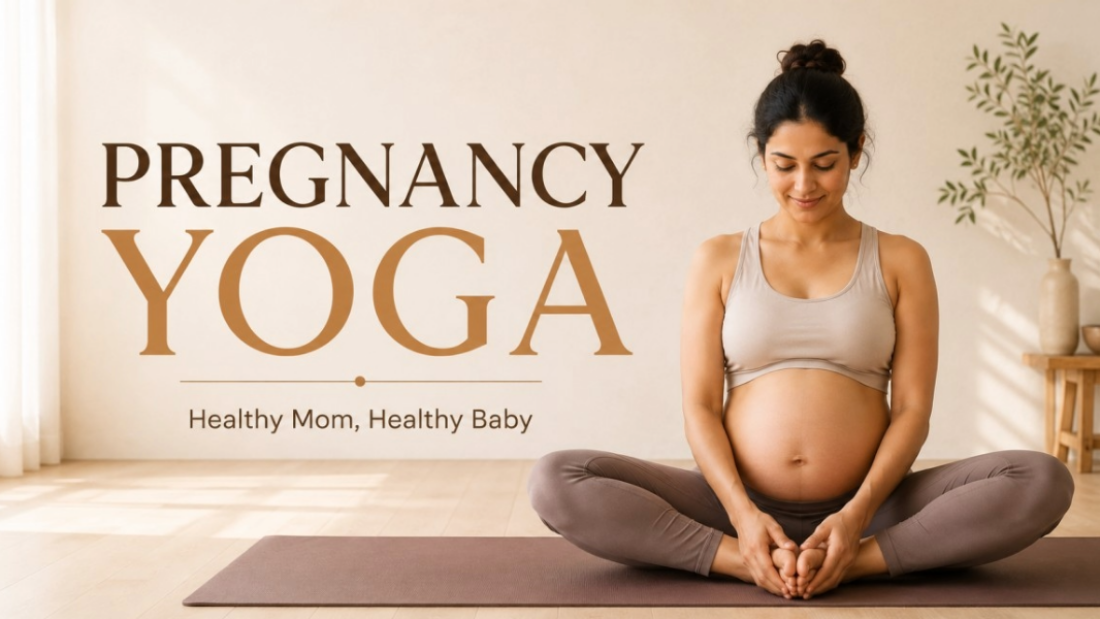
- Butterfly Pose — opens the hips and inner thighs
- Supported Child’s Pose (knees wide) — relieves lower back pressure
- Deep Squat (Malasana), supported — encourages optimal fetal positioning
- Left-Side Reclining Rest — improves circulation to the baby
Poses and Practices to Avoid During Pregnancy
Deep twists that compress the abdomen
Lying flat on your back for extended periods (after the first trimester)
Hot yoga or heated rooms (overheating risk)
Deep backbends
Any pose requiring lying on the stomach
Jumping or high-impact transitions
Sample 15-Minute Daily Pregnancy Yoga Routine
- Breathing warm-up (2 min) — seated, deep belly breathing
- Cat-Cow (3 min) — 10 slow rounds
- Supported Triangle Pose (2 min per side)
- Butterfly Pose (3 min) — with gentle forward lean if comfortable
- Supported Child’s Pose (3 min)
- Final relaxation (2 min) — lying on left side, eyes closed, slow breathing
Do this daily or every other day, adjusting based on how your body feels.
Frequently Asked Questions
When can I start pregnancy yoga?
Most instructors recommend starting after the first trimester (around week 14), though gentle breathing and seated stretches are safe earlier — always with your doctor’s approval.
How often should I practice prenatal yoga?
2–4 sessions per week is a common recommendation, but even 10–15 minutes daily offers benefits.
Can pregnancy yoga help induce labor?
Certain poses like deep squats and hip openers are believed to help encourage optimal baby positioning, but no yoga pose guarantees labor induction. Always consult your doctor near your due date.
Is online pregnancy yoga as effective as in-studio classes?
Yes, as long as the instructor is certified in prenatal yoga and you have enough space to move safely. Many expecting mothers prefer the flexibility of online classes.
Do I need any equipment?
A yoga mat, a bolster or firm pillow, and a wall or chair for support are usually enough to get started.
Ready to Start Your Pregnancy Yoga Journey?
Every pregnancy is different, and a class tailored to your trimester and body makes all the difference — both in comfort and safety.
